Pain vs Discomfort: Learning the Language of Your Ultra Body
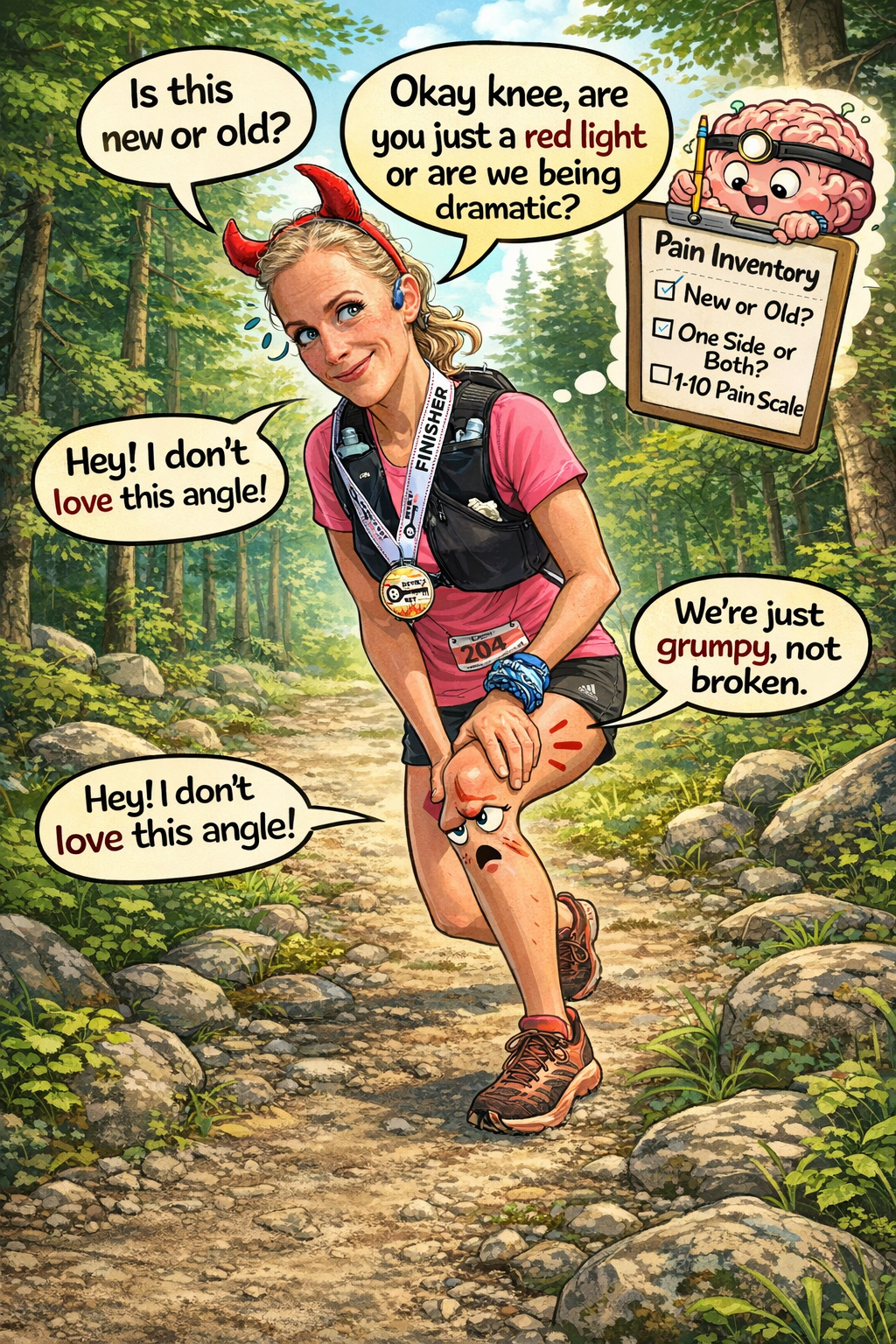
If you are training for your first 80 K or 100K ultra, let me say this right up front: Yes, there will be discomfort. No, that does not always mean you are injured. But here is the magic. Ultra running teaches us to tune in, not tap out. The more fluent you become in the language of your body, the better decisions you will make about when to push through and when to pull back.
Discomfort is Inevitable. Pain is a Different Story
In the world of ultras, there is the kind of pain that makes you stronger, like sore quads and spicy glutes. And then there is the kind of pain that starts as a whisper and turns into a scream. That is the one saying, "Hey girl, we need to talk".
Discomfort is burning legs on a climb, fatigue in the final 10K, or a dull ache in your calves after back-to-back long runs. These are familiar, expected, and honestly earned. Pain, though, is sharp or sudden. It usually shows up on one side, and it sticks around. Sometimes it even changes the way you move.
Pain is a Signal. Not a Stop Sign
Pain is your body trying to tell you something. It is not always a big emergency, but it is a nudge to check in. So take a moment and puzzle it out.
- Is this something new?
- Is it only on one side?
- Does it feel better with movement or worse?
- Is it low on the pain scale like a three or less or is it creeping up past five?
- Is it changing how I move or run?
Keep a little inventory. If it is something new or you are unsure of the impact, make a note. You will start to see patterns, and that helps a lot with future decisions.
Mindful Coping is Your Ultra Superpower
Experienced ultra runners are not just grittier. They are also more in tune with what their bodies are saying. They have built a relationship with discomfort. It is not about ignoring the pain. It is about being curious about it instead of freaking out.
Mindful coping sounds like this. My feet are barking, and my hamstrings feel like overcooked noodles, but I am still moving well, and nothing feels like it is about to snap. It is checking in instead of spiralling or gaslighting yourself into thinking it is nothing.
The Traffic Light Trick
This one is simple and so helpful.
Green Light: Mild Soreness, feels the same on both sides, gets better as you move, and stays around a three out of ten. You are good to go. Maybe take it a bit easier.
Yellow Light: Discomfort that is nagging or one-sided, sticks around after your run, or creeps up past four out of ten. This is your heads up. Shorten your run, go slower, or swap it out for something gentler.
Red Light: Sharp or sudden pain that is getting worse or changing how you move. If it is still hanging around the next day, that is your cue to stop and maybe get it checked out.
My Own Red to Green Moment
Last year, during the 100K Sulphur Springs race, I hit a weird patch around the 65K mark. My knee area started to feel off. Not just sore, but like I should not run on it. So I stopped. I did a quick stretch check to figure out where it was coming from. Turned out it was more of an IT band thing.
So I stretched it out. Hamstrings, glutes, quads, IT band, all got a little love. I drank some fluids, walked it out for about two kilometres, and told myself to relax and not tense up. And you know what? It went away like magic. Never came back for the rest of the race.
Rest Days Are Part of the Plan
Taking a break is not giving up. Rest is part of training. If something feels off and your body is waving a yellow or red flag, do not ignore it. Showing up consistently means being smart enough to back off when needed.
Your Body is Not a Machine. It is Your Teammate
Pain is not betrayal. It is a message. The more you listen with curiosity and kindness, the better you will get at responding. Learn how your body speaks, respect what it tells you, and know the difference between discomfort that builds you and pain that breaks you.
So next time you feel something mid-run, do not panic. Pause, puzzle, and move forward with care.

Member discussion