UTMB Canyons Endurance Race 100K
Pre-Race: Confidence Is Temporary
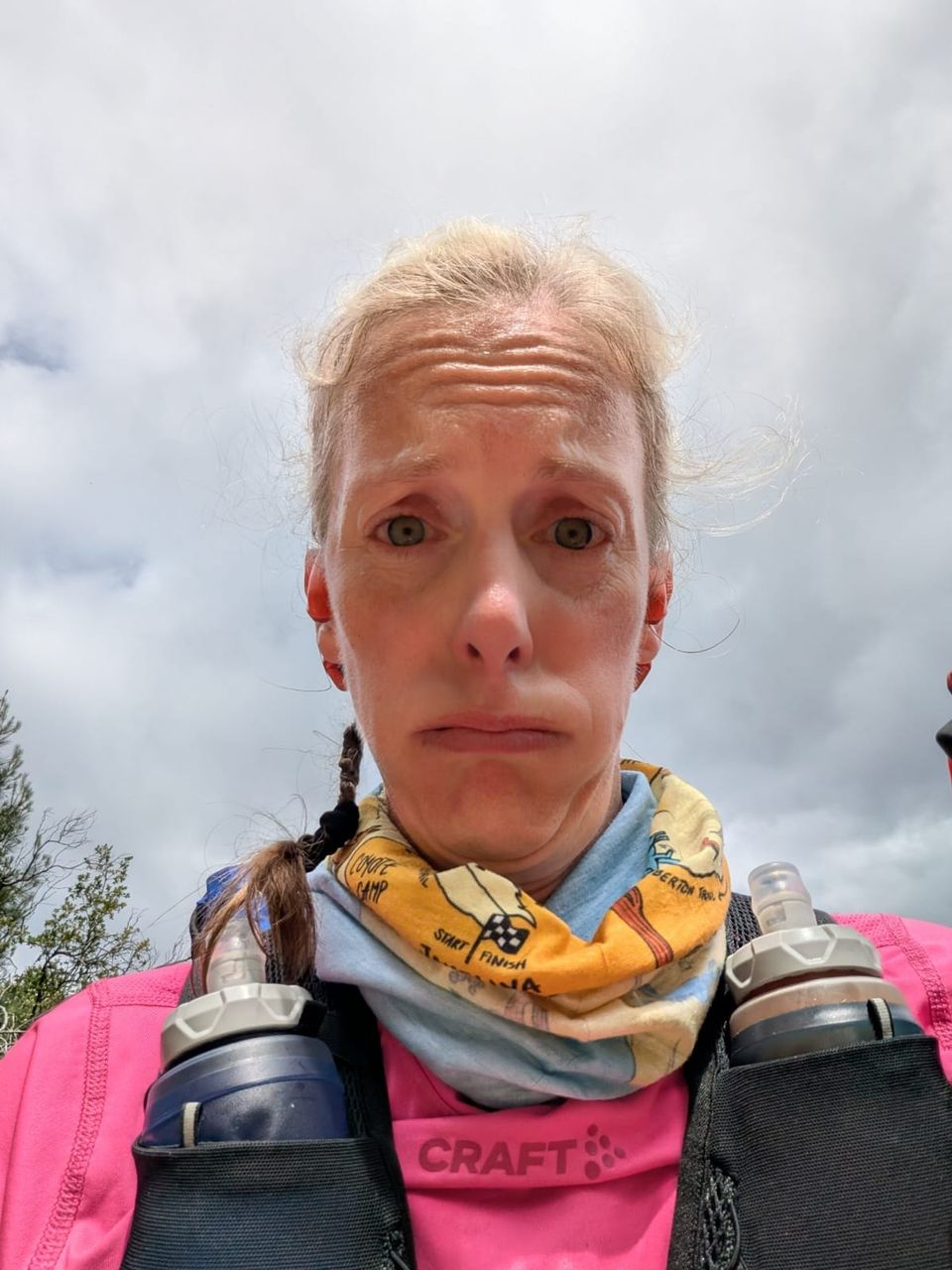
Leading into this race, I was nervous. This was a mountain race. I live in Ontario. The closest thing I have to mountains is the escarpment.
Canyons is no joke: 103 km with 3,700m of climbing and descending. Going into the race, I was nervous about the climbs and genuinely excited for the downhills. Living in Ontario, I thought the descents would be the fun part. What I didn’t realize was that every downhill was quietly loading a baseball bat aimed directly at my quads.
Still, arriving Thursday gave us time for a little adventure before the suffering began. We drove to Napa for champagne and charcuterie because apparently my race prep strategy is “pretend I’m sophisticated before becoming feral in the mountains.”
My training partner Xavier was also racing. This was an important one for him to earn his Western States ticket. My goal was to support him along the way.
Spoiler alert: he spent most of the race supporting me.
Gear
- Brand-new Hoka Challengers (half size too big because toenails should be saved)
- Smartwool socks, Reebok shorts, Brooks shirt in ‘international red’ colour, in case my body needed to be located
- Salomon 4L vest with 3 flasks
- Salomon quiver to give my Leki poles the vip treatment
- Fuel: turkey and cheese tortilla roll-ups, Xact bars, Gu, Precision fuel, and whatever else my stomach would tolerate before filing formal complaints
Race Morning: Sleep Is for Non-Ultrarunners
The alarm went off at 1:45 a.m.
There is something deeply unsettling about voluntarily waking up in the middle of the night to go run through mountains for 17 hours.
We drove 30 minutes to catch a 45-minute shuttle to the start line. Thankfully, runners were allowed to stay on the warm bus until 15 minutes before the race. The logistics were incredibly smooth, gear drop was easy, volunteers were calm and organized, and the whole thing somehow felt civilized despite what was coming.
At the start line, runners were released slowly in small groups to naturally spread the field out. Honestly, genius. No giant stampede. Just hundreds of people politely heading off to destroy themselves one at a time.
And then we were off.
Deadwood (0–17 km): False Confidence
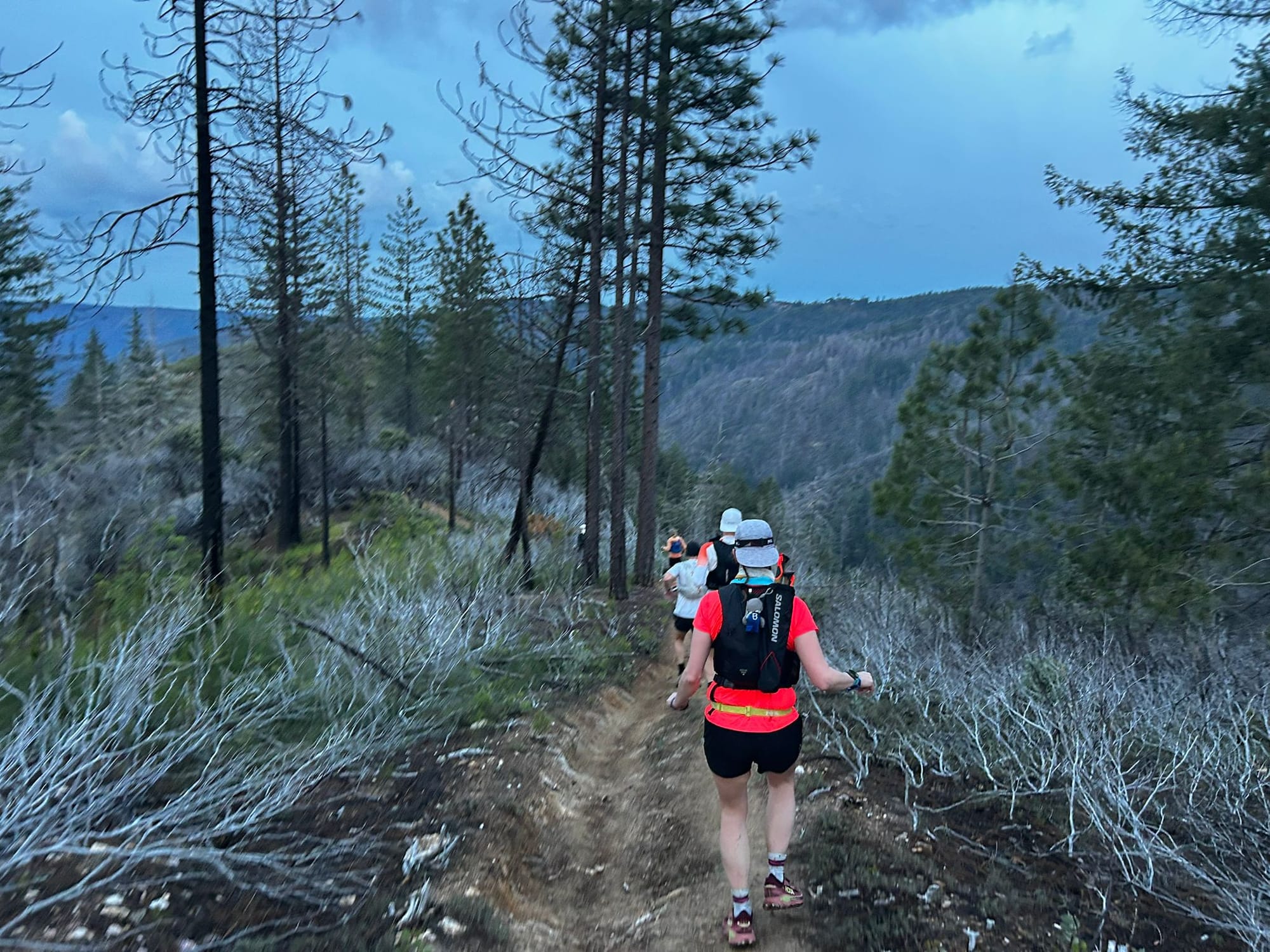
The first stretch was surprisingly smooth. We opened with beautiful downhill running through the dark forest, and for a brief moment I thought:
“Maybe this won’t be so bad.”
That feeling lasted approximately 11 km. Even had a pee break in the middle of an intersection Angela style.
Then came the first climb.
Canyons doesn’t really “ease you into” anything. It introduces itself by grabbing your soul and dragging it uphill.
Still, we survived the climb, rolled into Deadwood Aid Station, restocked, and mentally prepared for the section everyone talks about:
Devil’s Thumb.
Devil’s Thumb: The Descent That Ate My Quads
The descent into Devil’s Thumb was absurd.
A mile and a half straight down over technical rocks where every step felt like a negotiation between gravity and your kneecaps. You spend the entire descent braking, guarding, and questioning your life choices.
By the time I reached the bottom, my quads had already started filing for divorce.
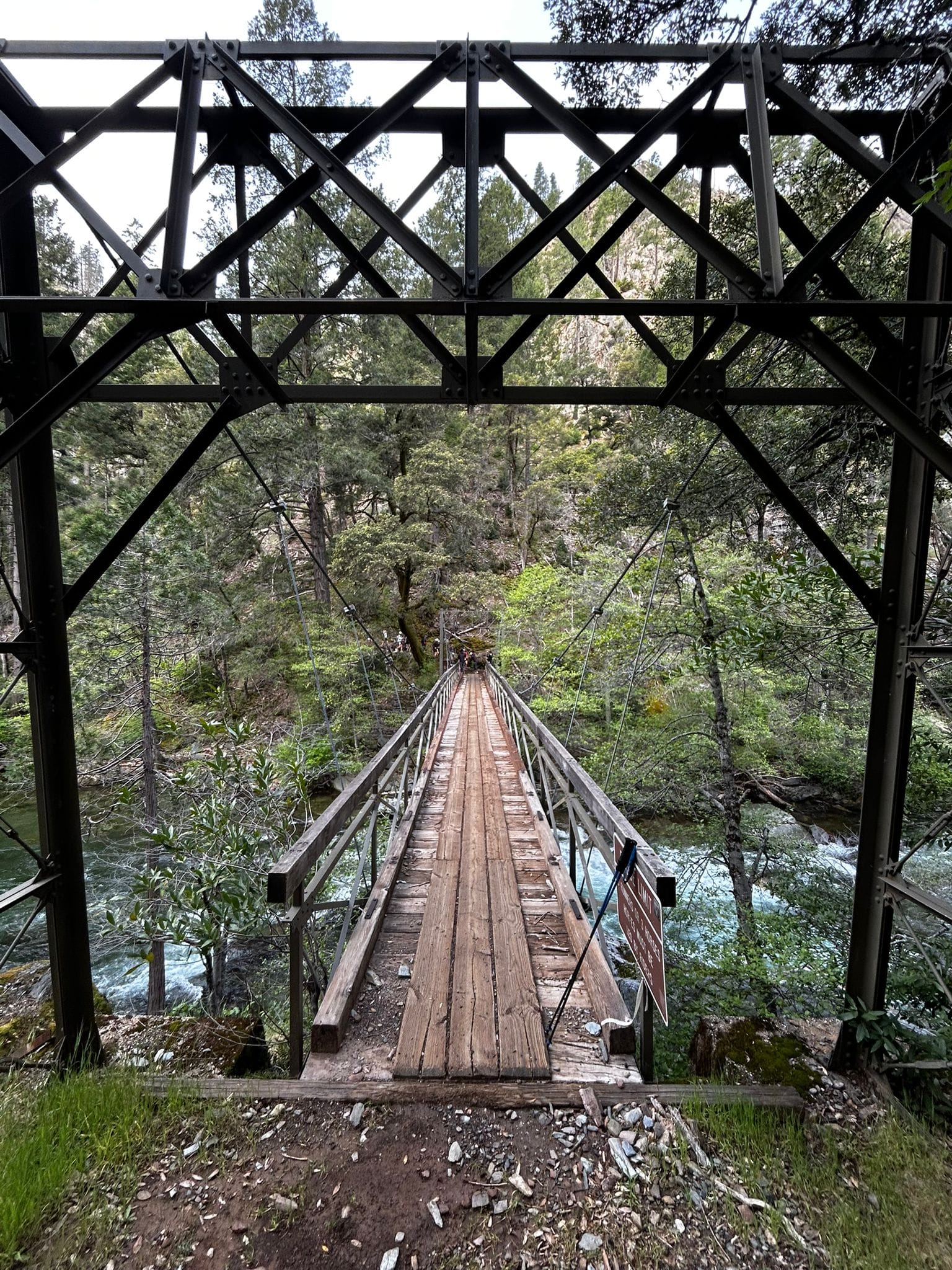
But then came one of my favourite moments of the entire race: the swinging bridge.
After all that punishment, suddenly you’re bouncing across this bridge over rushing water like a kid on a playground. I was laughing. Jumping. Smiling. It felt magical and ridiculous all at once.
That tiny burst of joy somehow gave me enough energy to turn around and climb the entire thing back up.
Meanwhile, Xavier had reached the bottom well ahead of me and had apparently found enough spare time to:
- take videos,
- stop for a pee,
- possibly chat with wildlife,
- and still casually wait for me to jump up and down on a bridge like I won the lottery.
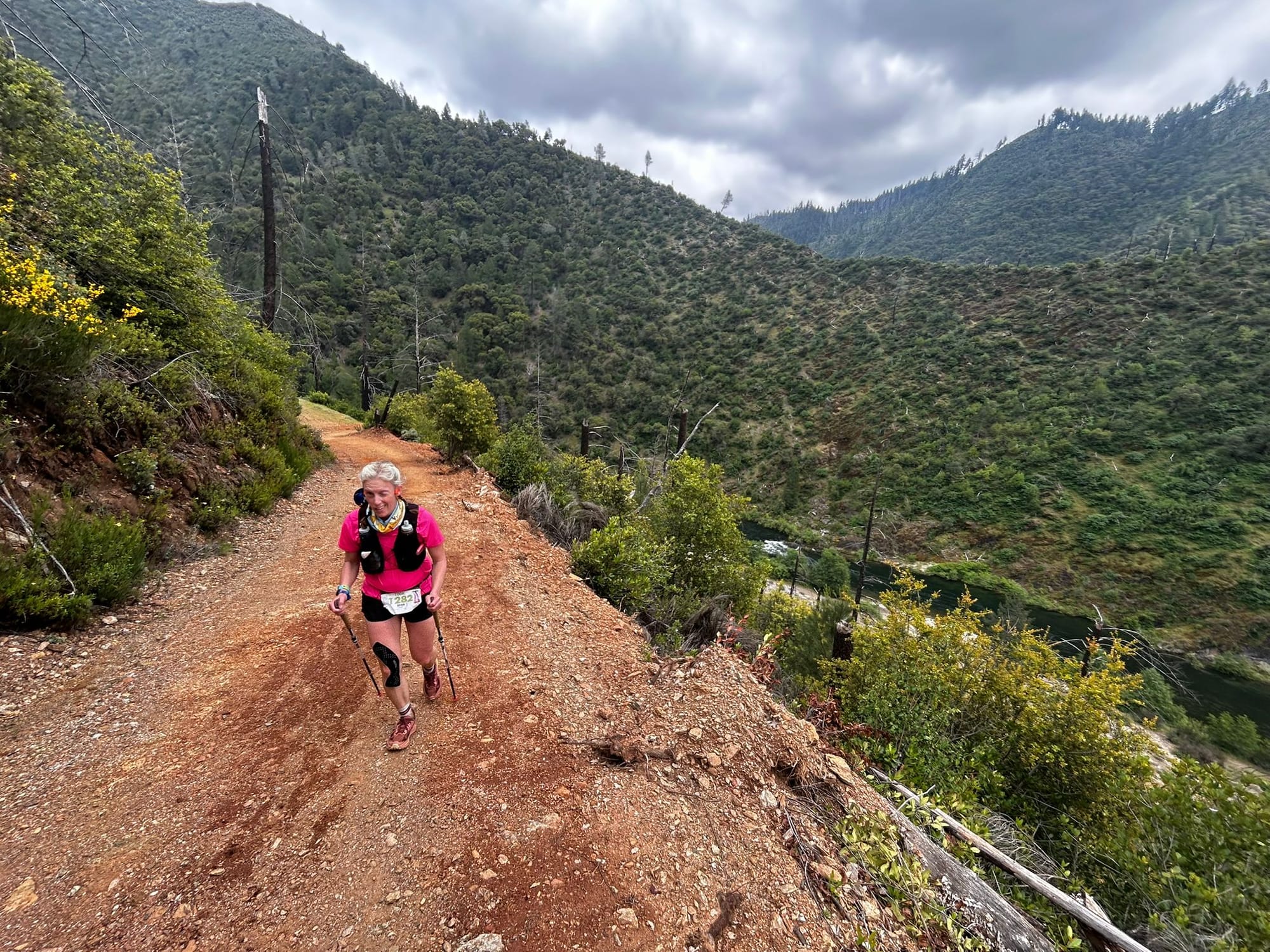
The climb back up actually felt… fun? There were endless switchbacks, probably 22 to 25 of them and as we climbed, we passed runners heading down into the carnage. Everyone looked equally horrified, so naturally we cheered each other on by name like traumatized camp counsellors.
Deadwood 2 to Michigan Bluff: The Choo Choo Train
By the second trip through Deadwood, around 30 km in, my quads were cooked.
Not “a little sore.”Cooked.
And unfortunately, the course designers were not interested in my feelings.
The next section included another long descent followed by another long climb. Somewhere in there, we linked up with about nine other runners and accidentally formed what became known as “the bus” or “the choo choo train.”
We climbed together, shuffled together, suffered together, and honestly, it became one of the best parts of the day.
That’s one of the weirdly beautiful things about ultras. Complete strangers become temporary family because everyone is equally broken.
Michigan Bluff: The Low Point
Michigan Bluff hit hard.
Xavier got there ahead of me and immediately switched into full support mode. By now, I was struggling badly.
I couldn’t look at food without dry-heaving. My right meniscus was screaming. My quads were toast. Emotionally, spiritually, and physically… I was medium rare at best.
At this point, I made a deal with myself:
Just get to Foresthill.
Foresthill (49 km): The Mid-Race Rebuild
Foresthill felt enormous. Crowds, energy, noise, civilization… and angels disguised as volunteers.
I was shocked to see Xavier still there. I’m convinced he waited for me because by this point my brain had switched into low-power mode.
I grabbed my drop bag, changed my shirt, and blinked several times while trying to translate whatever Xavier was saying to me. It may as well have been French. I nodded confidently despite understanding approximately none of it.
Then I made my way over to the medical tent to get my knee taped up, where I met Bri from Vancouver while we both sat there looking like runners held together by hope and kinesiology tape.
The volunteers and medics here were incredible. Calm. Kind. Efficient. Nobody treated runners like inconveniences or broken zombies wandering into their tent smelling faintly of electrolytes and regret. They treated us like humans trying to do something difficult.
That mattered more than they probably realize.
Once taped up and patched back together, I headed toward Cal 2 the mythical “flat section” of the course.
And I LOVED it.
After hours of relentless climbing and quad-destroying descents, running flat ground felt like unlocking a cheat code. Xavier and I played leapfrog for kilometres. I’d catch him. He’d pass me. I’d reel him back in again.
Then the descents returned.
And my quads officially submitted their resignation letters.
At that point, I adopted a brand-new race strategy: Walk well.
Cal 2 to Drivers Flat: Becoming a Zombie
This section looked runnable on paper.
It was not.
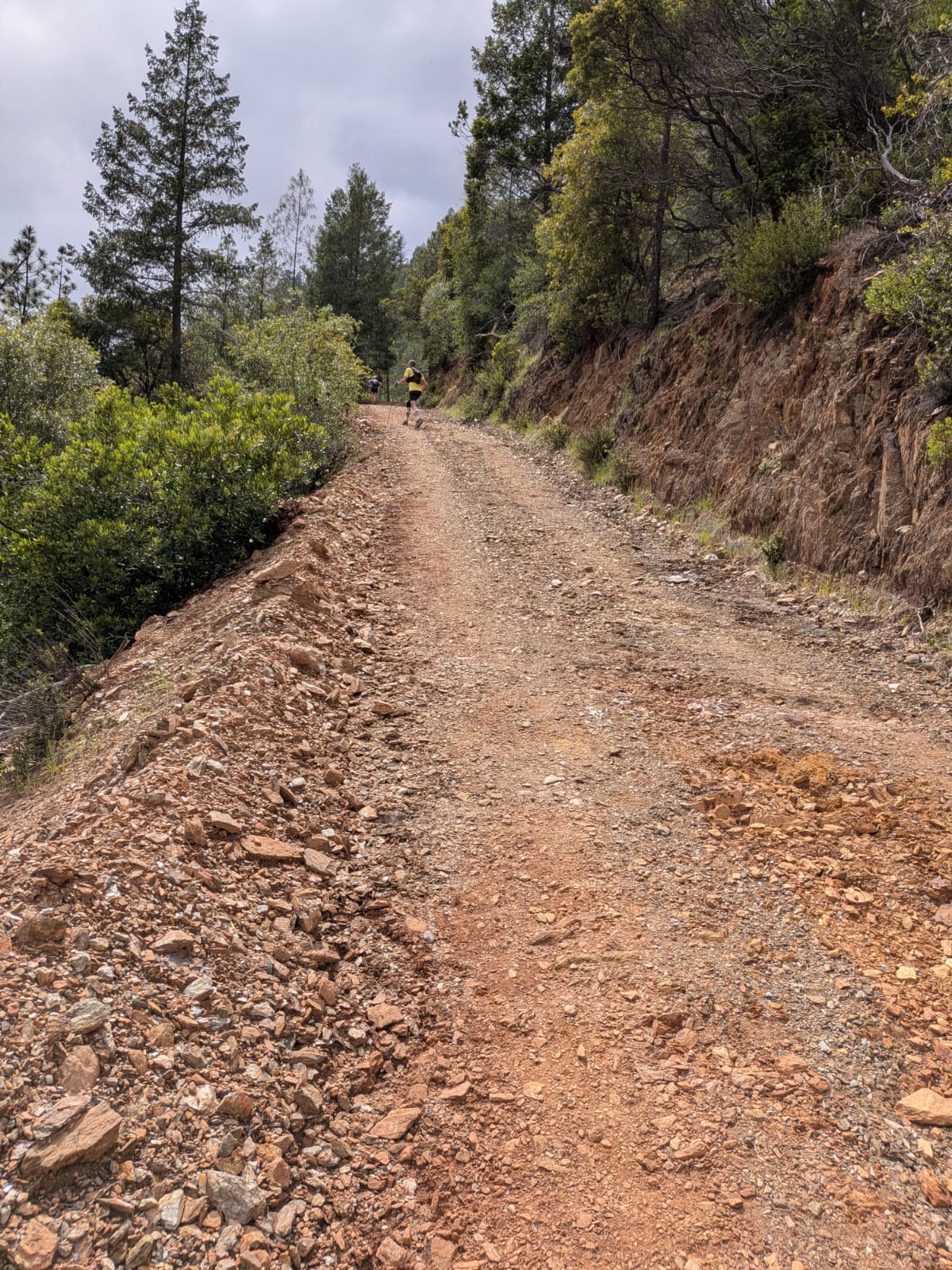
Instead, it was endless gravel road climbing that slowly drained whatever humanity I still had left inside me. The kind of climb where you keep thinking the top must be just around the corner, only to discover the mountain has other plans.
By the time Xavier and I reached Drivers Flat at 74 km, I was entering full ultrarunner zombie mode. Somehow, despite all the yo-yoing throughout the day, we were still moving through the course together.
I spotted a fireplace at the aid station and immediately shuffled toward it like a Victorian orphan seeing warmth for the first time in months.
The volunteers here were absolute angels.
One volunteer refilled my flasks while Xavier returned with broth and a piece of plain white bread. The broth was horrific, but at that point warm liquid was warm liquid, and according to the audiobook I had been listening to for half the race, bread settles the stomach. So naturally, I trusted the bread.
Then the same medic from Forest Hill walked over, took one look at the flapping remains of my knee tape, and without warning ripped it straight off my leg.
I was so startled, I think I briefly left my body.
Then he calmly said, “Now let me tape it the way I want.”
Spoiler alert: his tape job also failed too. 😂
Still, the care from these volunteers and medics was unbelievable. They weren’t just staffing aid stations. They were holding runners together, physically and emotionally, out there.
I layered up because I was getting hypothermic, took one last look at the warmth of the fireplace, and headed out towards the darkness.
It would be the last time I saw Xavier until the finish line.
The Long Night March
This became the most human section of the race.
Nobody was flying anymore. Everyone was damaged.
I met runners like Pickle Pants Cody and American Flag Shorts Colt, and we all made the same noises every time we stood up or climbed anything, somewhere between hard labour and a haunted house soundtrack.
At one point, I told them to go ahead because I felt slow.
They replied: “No, your pace is perfect.”
My “perfect pace” was about 10 minutes per kilometre.
But somehow we kept moving.
Mammoth Bar to Confluence: Acceptance
At Mammoth Bar, something changed mentally.
I stopped fighting the race.
I knew I could finish. It wasn’t going to be pretty, but it was going to happen.
I put on my headlamp, jacket, and prepared for the thing that scares me most: running in the dark.
By the time I reached Confluence, it was pitch black. Two police officers lit the way while a volunteer with a Swiss-German accent filled my bottles, handed me ginger ale, and gave me the exact amount of encouragement I needed.
Then came one of my favourite decisions of the race.
I put away my poles.
My arms were tired. My legs were tired. I just wanted to move freely and take in the final stretch.
A kind man named Jude helped me fix my stubborn poles and stuff them into my quiver. Then another volunteer adjusted them again when they started smacking me in the back of the head 300 meters later.
The volunteers at this race were truly exceptional. Every single one treated runners with patience, humour, and compassion, even when we looked completely feral.
The Final Climb and the Great Watch Betrayal
The final 7 km felt endless.
There were confusing intersections where groups of exhausted runners collectively shrugged and said, “I guess this way?”
Thankfully, we guessed correctly.
Then, because this race enjoys psychological warfare, the final section included more switchbacks climbing back up toward the finish.
Naturally.
At some point, my watch completely crashed and restarted itself.
Then came the final paved road section. I’ve been dealing with Morton’s neuroma in my left foot, and every hard step felt like stepping on a Lego made of fire.
But by then, everything hurt, so what was one more thing?
Finally, the last runnable stretch appeared.
I waddled toward the finish one tiny step at a time.
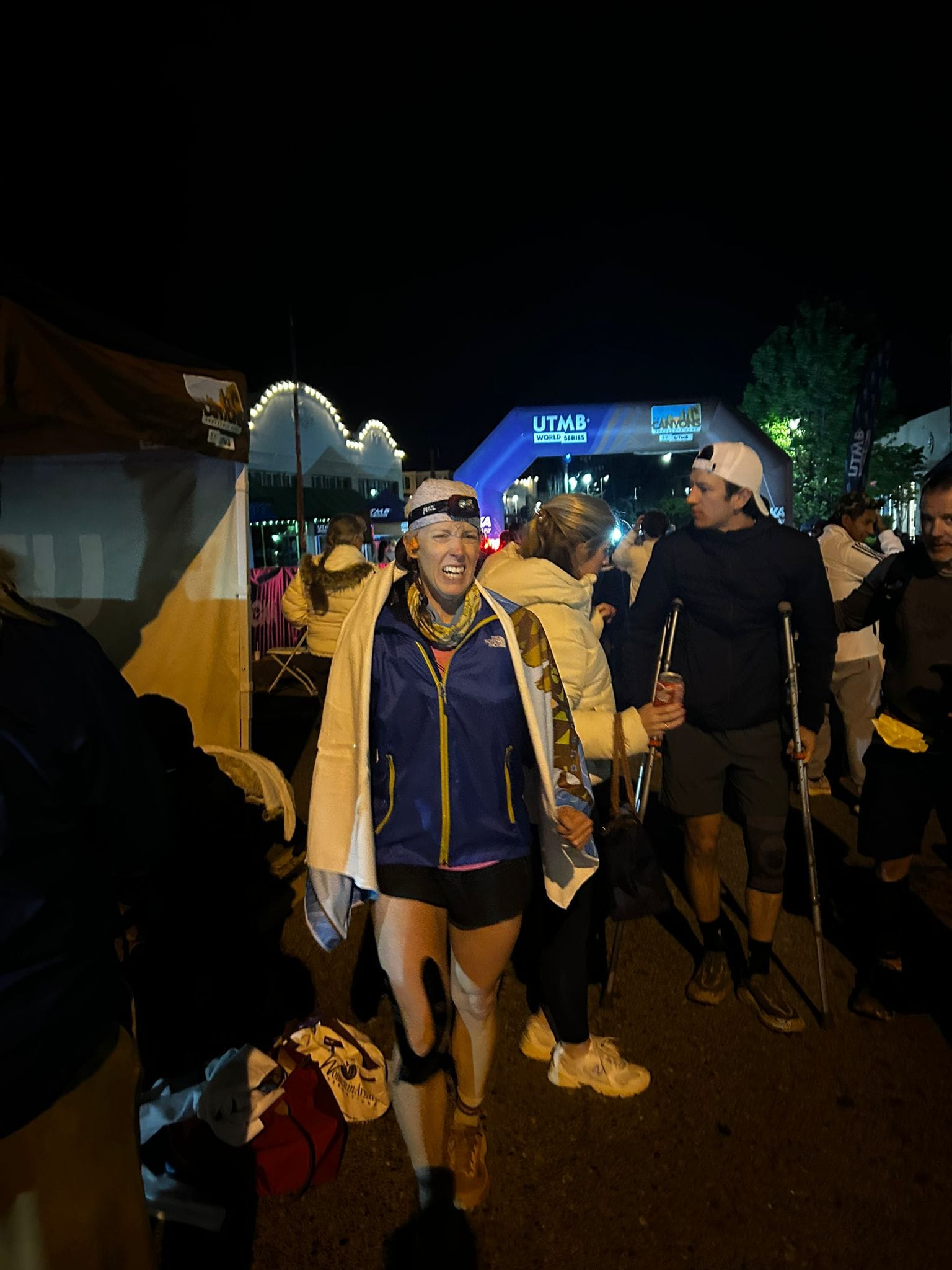
And then I crossed.
I immediately burst into tears and started hyperventilating. Exhaustion. Pride. Pain. Relief. Probably all of it together.
Then I turned around and asked where the medal pickup was.
The volunteer handed me… a towel.
A towel!
So apparently I ran 100 km and destroyed my quads for home linens.
I’m used to marathons where you suffer for a banana and a medal. This somehow felt funnier.
Post Race: The Price of Adventure
Shockingly, I slept five hours after the race, which never happens.
The next morning, my quads refused to function. They were tender to touch. My feet hurt. Reaching my toes became an Olympic-level mobility challenge.
And honestly?
Worth it.
This race was brutal, ridiculous, beautiful, and unforgettable.
There were river crossings, endless climbs, technical descents, hypothermic moments, and volunteers who genuinely carried runners through the day with kindness.
Most importantly, I got to share it with Xavier, my training partner, my occasional pacer, and the person who brought me back to life multiple times out there.
This was truly a once-in-a-lifetime experience. Absolutely no chance I will ever come back to do this race again.
…unless I get into Western States.
Lessons From the Quad Crusher
1. The highs and lows always pass - This race was one long emotional roller coaster. One hour, I felt strong; the next, I was silently calculating how realistic it would be to call an Uber from the middle of a canyon.
But I never truly doubted I could get to the finish. Maybe slowly. Maybe dramatically. Maybe one painful shuffle at a time. But forward is forward.
2. A good audiobook is basically legal ultrarunning doping - I listened to a book for almost 10 hours of this race, and honestly, it probably saved me mentally. When your body starts protesting, having your brain transported somewhere else for a while is a gift.
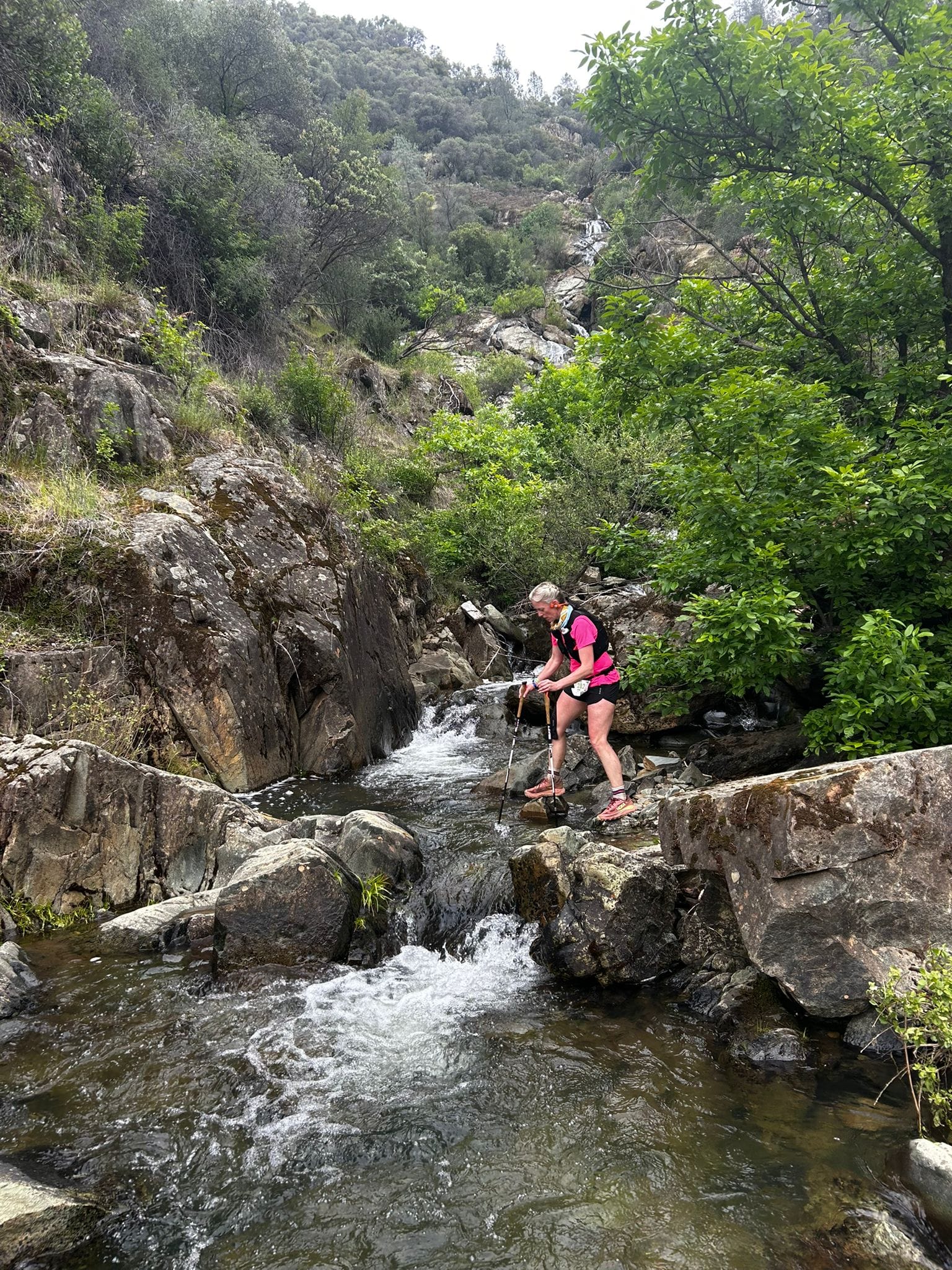
3. “A little water on the course” is trail runner language for “prepare to cross rivers”. Trail race descriptions are wildly misleading. “A little water” apparently means: knee-deep river crossings, hopping across slippery rocks, and accepting that your shoes will remain wet forever.
Okay, now it’s time to heal, teach my quads how to function like normal members of society again, and somehow prepare for Sulphur Springs 100K in three weeks.
Because apparently I didn’t learn my lesson the first time. 😅
Pictures of the event
Member discussion