What You Can Control, And What You Can’t
Four days before your race, you feel ready. The taper has been kind to you, your training went well, and you are finally starting to feel excited.
Then you check the weather.
Rain.
Heat.
Humidity.
Maybe all three if the trail gods are feeling spicy.
Suddenly, your brain starts spinning. You question your gear, your pacing, your nutrition; maybe even your entire existence. Before you hop on that emotional rollercoaster, it is important to remember one thing:
You can only control what you can control.
The weather is not one of those things.
So how do you stop yourself from spiralling?
I like to go back to training.
Remember those snowy runs? The soaking wet long runs where your shoes sounded like squishy dog toys? The hot runs where you questioned every life choice by kilometre three?
You have already been trained in uncomfortable conditions. You have more experience than you think.
Instead of panicking about race day weather, ask yourself:
“How did I handle these conditions in training?”
Because the answer is usually already there.
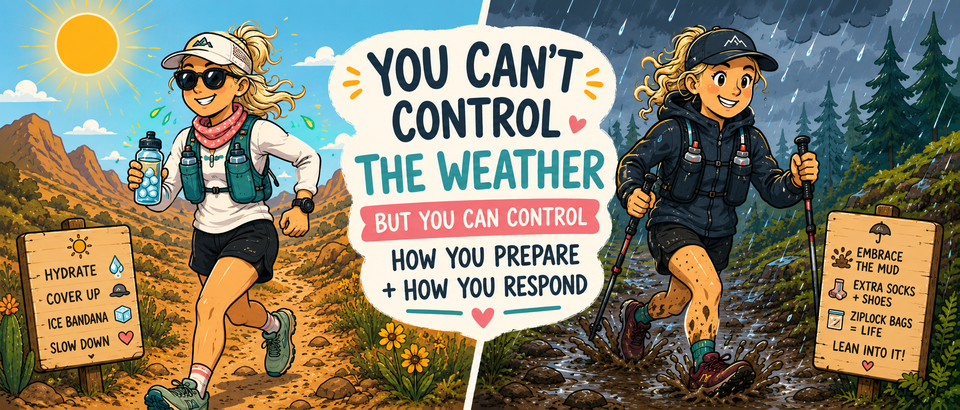
Running In Hot Weather Outside Your Norm
If race day is looking hotter than what you are used to, preparation starts several days before the race; not the morning of.
A few things I like to focus on:
Hydrate early
Hydrating consistently for several days beforehand will go a long way. Waiting until race morning is way too late.
Cover your skin
Long sleeves and a hat can actually help keep you cooler when using light, breathable fabrics. Bonus points if the fabric cools well once wet.
Ice bandanas are magic
An ice bandana can help keep your core temperature lower and honestly feels incredible when things get spicy out there.
Be smart with sunscreen
Wear sunscreen, but avoid putting it on your forehead. Your hat will cover that area, and sunscreen dripping into your eyes mid race is a special kind of suffering.
Keep fluids cold
Freeze your bottles beforehand or add ice where possible. Cool drinks are easier to tolerate in the heat and somehow just taste better too.
Eat foods that feel refreshing
Hot races can make it harder to eat, so finding foods that feel refreshing can help a lot.
I LOVE watermelon at aid stations. It is tasty, refreshing, and a fun way to sneak in extra fluids. If it is especially warm, adding a little salt can really help too.
Cucumbers are another favourite. Sometimes your mouth just wants a different taste after hours of sweet nutrition.
Don't underestimate the power of a cup of Coke or Ginger Ale.
Slow down
Seriously. Slow down.
Heat changes effort levels dramatically. Your pace on a cool spring day is not your pace during a heat wave, and that is okay.
Running In The Rain And Mud
Some races get rain.
Some races become soup.
I have run races where the trails turned into full-blown pudding, and honestly? Fighting the conditions usually makes things worse.
A few things that help:
Wear a good hat
A hat with a solid brim helps keep rain off your face and out of your eyes. Tiny thing; huge difference.
Stop avoiding puddles
Run through them.
The centre of the puddle is often the best footing anyway. Jumping over puddles usually wastes energy and increases your chance of slipping.
Soggy-foot
Your feet may still get wet, but wool socks help keep them comfortable longer and reduce the miserable, soggy-foot feeling. I like Smartwool personally.
Accept that you will probably be wet
If it is cool out, a rain jacket can help, but only to a point. Eventually, most gear taps out. Once you stop fighting being wet, the whole experience becomes mentally easier.
Bring extra gear
Extra socks, extra shoes, zip lock bags; all absolute lifesavers.
Changing into dry socks halfway through a long race can feel like a spiritual experience.
Also, post race sandals or Crocs? Elite recovery move.
Fuel more than you think you need
Mud is sneaky.
Running through heavy trails and slippery terrain uses way more energy than people expect, so staying on top of hydration and fueling becomes even more important.
This is usually where I lean into harder foods: potatoes, chips, candy, or anything salty and easy to grab.
And honestly? Watermelon, cucumbers, and a little salt still hit perfectly here too.
One thing to remember in the rain is that you may not realize how much you are sweating because everything is already wet. You are still losing fluids even if you do not notice it as much.
Learn to move with the mud
You are going to slide a little. Lean into it.
Think surfing:
arms out, knees bent, stay relaxed.
Poles can also help if the terrain is especially messy.
Hot Or Wet, Chafing Does Not Care
Heat and rain both create prime chafing conditions, and sometimes in places you did not even know could chafe.
Use more anti chafe than you think you need.
Then probably add a little more.
Changing your shirt during longer efforts can feel amazing too. Washing your face at an aid station? Weirdly refreshing.
And if it is hot, remember to reapply sunscreen; especially on places people forget, like the back of the legs. The sun does not discriminate.
Focus On What You Can Control
You cannot control the weather.
You cannot control the trail conditions.
You cannot control what everyone else is doing.
But you can control:
your preparation,
your mindset,
your pacing,
your gear,
your attitude,
and how you respond when things get hard.
And honestly? That is where the good stuff lives anyway.
If it is muddy, everyone slows down.
If it is hot, everyone struggles a little.
You are not alone out there.
Trust your training.
Adapt where needed.
And remember, you have probably already done harder things on a random Tuesday training run.
Member discussion